01
Aircraft search and acquisition
We turn your mission, budget and timeline into a short list of aircraft, including some that are not advertised, and negotiate the one you choose.
Atlanta sits at the center of one of the world’s busiest airline hubs, and that is exactly why so many people here want an airplane that leaves when they do. Coast Aircraft Sales, based in San Diego, represents Atlanta-area buyers and sellers of piston singles, turboprops and light jets.
Whether your aircraft lives at DeKalb-Peachtree, Fulton County Brown Field, Cobb County, Gwinnett County or Falcon Field, we run the search, valuation, inspection and closing for you, with local shops doing the hands-on work next to your hangar.
Atlanta is a short flight from almost everything a Southeast owner cares about: Florida beaches, the Carolinas, the Gulf Coast, the Smokies and the Northeast corridor. For a family or a business that crosses those distances every month, an aircraft turns airline days into a few hours of door-to-door flying, and the right aircraft depends on whether most trips are 300 miles with four people or 900 miles with two.
That is where we begin. Before we send a single listing we ask how you fly, where you hangar and what you want to replace, then search listed and off-market aircraft against that picture. When you are selling, we price the aircraft from recent comparable sales rather than hopeful asking prices and present it to qualified buyers across the country.
Nothing in the process requires you to be in San Diego, and nothing requires the aircraft to move before it sells.
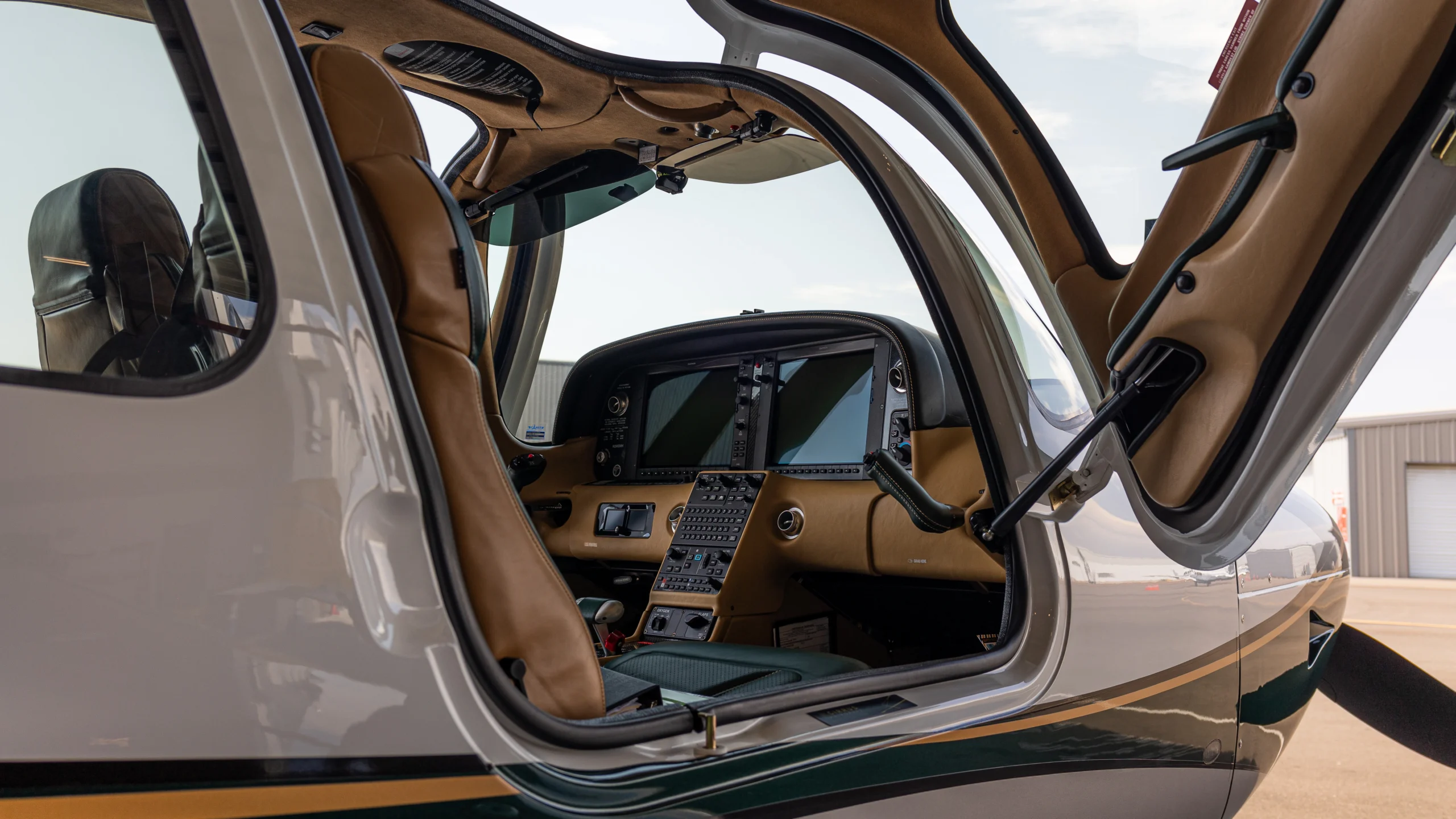
Pick one service or let us run the whole transaction. Each is handled by the same advisor from first call to closing.
We turn your mission, budget and timeline into a short list of aircraft, including some that are not advertised, and negotiate the one you choose.
Valuation, photography, marketing and qualified buyers, with showings and the buyer’s inspection arranged at your home airport.
We help you choose an independent shop that knows the type, brief it on what matters, and read its findings with you before you decide.
Logbook review, a title search through an aviation title company and an escrowed closing, so neither side has to trust the other with money.
If your aircraft sits between trips, aircraft management can cover crew, maintenance and scheduling so it is ready when you are.
Three things Atlanta buyers and sellers tell us matter most.
The person who learns your mission is the person who negotiates and closes. You are never re-explaining yourself to a new desk.
Photos, video calls, a trusted shop near your airport and a clean paper trail mean a Georgia transaction does not need a cross-country trip.
We operate our own aircraft service center, so when we read a logbook or a pre-buy report we know what the entries mean in the shop.
Most Atlanta owners keep their aircraft at one of the metro area’s general aviation fields. DeKalb-Peachtree (PDK) is the best known, with a long runway and a deep pool of avionics and maintenance shops. Fulton County Brown Field (FTY) sits on the west side, Cobb County-McCollum Field (RYY) to the northwest, Gwinnett County-Briscoe Field (LZU) to the northeast, and Atlanta Regional-Falcon Field (FFC) to the south. Each trades off hangar availability, fuel prices, approach options and your drive time, and we help you weigh those before an aircraft is bought.
Hartsfield-Jackson (ATL) lies under a large Class B airspace area, which makes a transponder, ADS-B and a capable GPS panel more than conveniences. Traffic advisories and a good autopilot are especially valuable when you are threading arrivals and departures on a busy afternoon.
Weather matters as much as geography. Summer afternoons bring thunderstorms that build quickly, so owners value weather information in the cockpit and, in many cases, an aircraft with the performance to climb above or go around them. Georgia heat and humidity are also hard on interiors, rubber and exposed metal, and that is exactly what a pre-buy should check.
The order matters. Each step protects you before money moves.
We talk through who flies, where and how often, and set a budget that includes insurance, hangar and training.
We search listed and off-market aircraft across the region and beyond, and send only those worth your time.
An independent shop near the aircraft inspects it while we review logbooks, damage history and title.
Funds go through escrow, paperwork is filed, and we help arrange the ferry flight to your Atlanta field.
These are the points that most often change which aircraft makes sense here.
Hangar space near the metro airports can be tight. Line up a place to keep the aircraft before you close, not after.
Ask how you will get weather in the cockpit and what the aircraft can do when a line of storms builds ahead of you.
Check ADS-B, traffic display, an autopilot you trust and a GPS that supports the approaches you will actually fly.
State tax rules depend on where the aircraft is based and delivered. Confirm the details with a CPA before you sign.
We work with aircraft based at DeKalb-Peachtree (PDK), Fulton County Brown Field (FTY), Cobb County-McCollum Field (RYY), Gwinnett County-Briscoe Field (LZU) and Atlanta Regional-Falcon Field (FFC), as well as smaller fields around the metro area. Showings and inspections are arranged where the aircraft sits.
PDK offers a long runway, instrument approaches and plenty of shops, but demand for hangars is high and traffic is heavier. Fields farther out can offer easier hangar access and a quieter pattern at the cost of a longer drive. The right choice depends on how often you fly and how soon you need the aircraft.
For four people and trips of 300 to 600 miles, owners often look at high-performance singles such as the Beechcraft Bonanza. If you regularly fly longer legs or want to climb above weather, a pressurized turboprop or a light jet becomes attractive, with higher costs and training to match.
Storms build quickly on summer afternoons, so many owners fly earlier in the day, carry weather information in the cockpit and plan alternates. A hangar protects the aircraft from hail and heat, and it is worth prioritizing when you choose where to base it.
Yes. We prepare the listing, show the aircraft to qualified buyers and arrange the buyer’s pre-buy at your home airport. The aircraft stays in your hangar until the sale closes, and funds move through escrow.
Yes. Turbine buyers have more to evaluate, including engine programs, hot section status and required training, and we guide each step. We also coordinate insurance and transition training so the aircraft can be flown when it arrives.
Humidity and heat accelerate corrosion, wear rubber seals and hoses, and age interiors. A good pre-buy looks closely at corrosion in hidden areas, at wiring and at the condition of the paint and trim, and the logbooks should show how the aircraft was stored.
Tell us what you fly, where you hangar and what you are looking for. A Coast advisor will come back with an honest view of the market and the next sensible step.
Our concierge team is standing by to orchestrate your next acquisition or manage your fleet.